Brixton Prison
Say NothingBrixton Prison was both a place of confinement and a stage on which hunger strike became a contest over political status, bodily control, and responsibility for death. In the early 1970s, Dolours Price and Marian Price were the only women held in the overcrowded, overwhelmingly male prison. Their protest there continued a history already marked by Terence MacSwiney, whose 1920 hunger strike and death in Brixton had become a powerful reference point in Irish republican memory.
Setting and earlier history
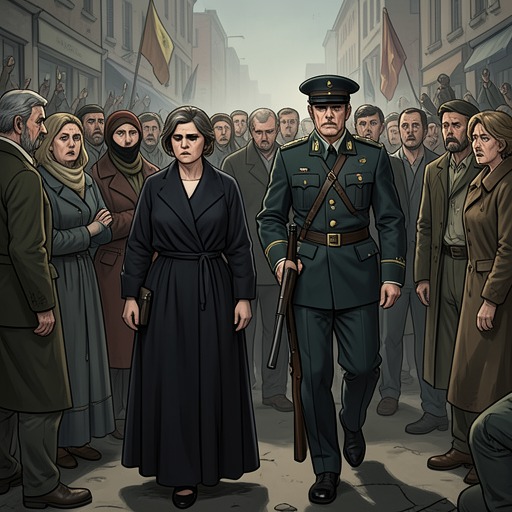
Described as a grim colossus enclosed by a high brick wall, Brixton had housed female convicts during part of the nineteenth century. By the time the Price sisters arrived, shortly after their conviction at Winchester Castle, they were its only female prisoners. They were kept in separate cells, but the prison’s size and routine brought them repeatedly into view of the men around them: during a half-hour of exercise in the yard each day and while being escorted through its long corridors. The sisters’ isolation was therefore also an exposure to a densely male institution, where fellow inmates called out to them as they passed.
The prison’s republican history gave the sisters’ protest an especially charged precedent. In 1920, Terence MacSwiney, an Irish republican poet and politician imprisoned there on sedition charges, refused food for seventy-four days, demanding release. He died in Brixton. His death prompted international protest: tens of thousands filed past his coffin before burial, and demonstrations took place in cities around the world. MacSwiney’s claim that those who suffer most will conquer helped shape a tradition of republican self-sacrifice. The inscription on his coffin assigned responsibility for his death to the British authorities, making the prison itself part of that political memory.
The Price sisters’ protest
The sisters arrived at Brixton already refusing food and taking only water. Dolours was assigned Prisoner No. 286185, a number that replaced her name with an institutional identity. They intended to continue the strike until death if necessary. Hugh Feeney and Gerry Kelly, imprisoned elsewhere, joined them. Their demand was for repatriation to prisons in Northern Ireland, where they wanted to serve their sentences as political prisoners rather than be treated as ordinary criminals in England.
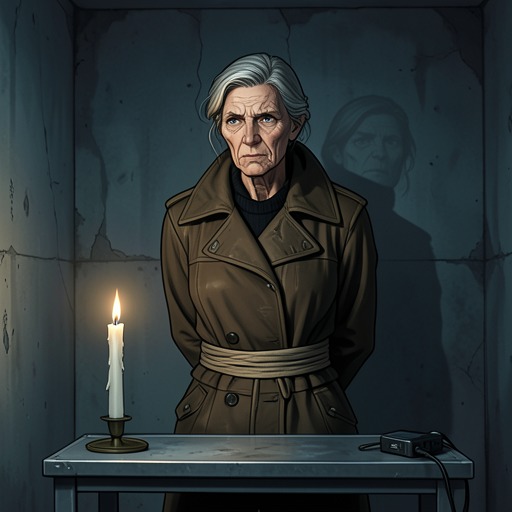
On 3 December, after the strike had lasted two and a half weeks, doctors and nurses entered Dolours’s cell and forcibly restrained her in a chair bolted to the floor. She was weak from not eating for more than two weeks. The medical staff tied her down with bedsheets, forced her jaw open with a wooden device, and inserted a tube to feed her. Two days later, they began the same procedure with Marian. The intervention made the prison a site not only of confinement but of direct physical coercion: the state could keep the women alive while overriding their refusal to eat.
Force-feeding became a daily routine. At ten each morning, doctors and nurses came to the sisters’ cells, restrained them, and poured food through tubes into their throats. The mixture included raw eggs, orange juice, and liquid Complan. The women sometimes vomited while the tubes were still in place and came close to choking. Dolours’s letters recorded both the bodily ordeal and her insistence that mental resistance remained possible even when physical resistance did not. When some of the letters were published, the procedure provoked public outcry. The Home Office initially presented it as care intended to prevent the prisoners from killing themselves, while the sisters experienced it as a forced and humiliating assault.
Resistance, stalemate, and transfer
The British government feared the consequences if either hunger striker died, including the possibility of large-scale retaliatory violence. It nevertheless did not immediately grant the demand for transfer. By May, the government had decided to stop force-feeding the Prices. Until then, the sisters had tried to endure the procedure without showing fear. They changed tactics when it became clear that the feeding was both inflicting trauma and keeping them alive. Rather than submit quietly, they resisted with enough force to make it difficult for doctors to insert the tubes safely. Dolours described the struggle in a letter as involving restraint and steel clamps; she also recorded the pain of the clamp on her gums. Their resistance altered the practical terms of the procedure, even though it did not itself secure the transfer.
On 8 June, Dolours and Marian, together with Gerry Kelly and Hugh Feeney, announced that they were ending the strike. They said the protest had lasted 206 days and that Roy Jenkins had assured them they would be returned to Northern Ireland. They presented the decision not as abandonment of their political demand but as its achievement: they had not set out to die, they said, but to obtain what they regarded as just and minimal demands. The transfer did not happen immediately; the sisters’ eventual move to Durham was reported in December 1974. Brixton thus remained the setting for a prolonged interval between assurance and release from the conditions they had opposed.
Political afterlife
For Dolours, Brixton remained a measure of what the political settlement might have cost and what it later asked her to accept. After the Good Friday Agreement, she regarded the settlement as a betrayal of the cause for which she and others had fought. She questioned the suggestion that Bobby Sands, had he lived, would have supported the turn to politics, recalling the possibility that her own hunger strike might instead have ended in death at Brixton. Her argument made the prison more than a remembered site of suffering: it became the counterfactual endpoint against which later claims about republican sacrifice and political reconciliation could be judged.
The location therefore links two distinct hunger strikes across generations. MacSwiney’s death turned Brixton into a symbol of martyrdom and contested responsibility; the Price sisters’ prolonged protest brought that inheritance into a later prison system, where forced feeding, public letters, and the demand for political status formed part of the struggle. In the narrative, the prison’s walls enclose bodies, but its significance travels outward through public protest, political memory, and the unresolved question of what their suffering was meant to achieve.